
1. All Articles
Wife Had an Affair: What You Should Do Now
Jun
Wife Had an Affair: What You Should Do Now
TL;DR: If your wife had an affair and you’re asking what you should do, the most important first step is this: avoid permanent decisions for at least 72 hours — your brain is in genuine trauma response and is not yet equipped to make irreversible choices. Research on betrayal trauma consistently categorizes infidelity as a major traumatic event, with psychological impact comparable to other acute trauma. Both paths forward — rebuilding the marriage or ending it — become clearer and more manageable once the initial crisis window has passed.
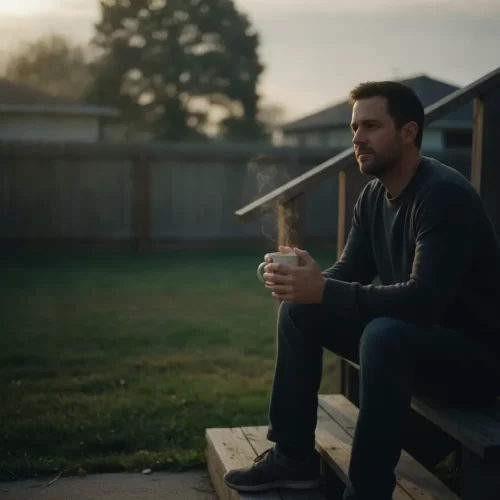
You just found out your wife had an affair. And right now, you may feel like the floor has dropped out from under you.
That feeling is real. This is one of the most destabilizing things a man can experience. The life you thought you had — your marriage, your family, your future — suddenly looks completely different.
If you’re searching “wife had an affair, what should I do,” you’re in the right place. You don’t need to have it all figured out today. What you need right now is a clear, honest guide to help you survive the next few days and move forward without destroying yourself or your options in the process.
This post gives you exactly that.
The First 48 Hours: What You’re Feeling Is Normal
The moment of discovery — whether it was a text, a confession, or something you found — creates what trauma researchers call an acute stress response. Your nervous system is in full crisis mode. This is not weakness. This is biology.
You may feel rage so intense it scares you. Or a strange, hollow numbness. Maybe both — swinging between them every few hours.
You might replay conversations, looking for lies you missed. You may feel humiliated, even though you did nothing wrong. You may wonder if any of it was real.
All of this is normal.
Men who discover infidelity often describe the first 48 hours as the worst of their lives — worse than job loss, worse than physical injury. Research on betrayal trauma confirms that the psychological impact of infidelity is comparable to other major traumatic events. The shock disrupts your ability to think clearly, regulate your emotions, or see the future accurately.
This is exactly why the first 48 hours are not the time to make permanent decisions.
Your brain is not working the way it normally does right now. That is not a flaw — it is a fact. Honor it by giving yourself permission to simply get through this window before you act on anything major.
What Should You Do Immediately After Discovering Your Wife’s Affair?
The most important thing you can do right now is stop, breathe, and avoid irreversible actions.
That sounds simple. It is not. When you are this hurt and this angry, the urge to act — to confront, to leave, to tell everyone, to blow everything up — is overwhelming. But actions taken in the first days of crisis are often deeply regretted.
Here is what to do instead:
Step 1: Secure Your Physical and Mental Safety
If you are having thoughts of harming yourself or others, call or text 988 (the Suicide and Crisis Lifeline) immediately. Infidelity can trigger a genuine mental health crisis. Getting support is not weakness — it is the right call.
If you are physically safe, find a quiet place where you can breathe. Your own car. A park. An empty room. Even ten minutes of physical stillness can help lower your cortisol enough to think more clearly.
Step 2: Do Not Make Major Decisions for at Least 72 Hours
Do not file for divorce today. Do not move out on impulse. Do not tell your children. Do not post anything on social media. Do not call her family or yours in the heat of the moment.
These actions can have legal, financial, and relational consequences that are very hard to reverse. Give yourself a 72-hour rule: no permanent decisions for at least three days. If you want more context on what this early window looks like for different people, the guide on what to do next after catching your spouse cheating covers this period in practical detail.
Step 3: Write It Down
Get a notebook — physical or digital — and start recording what you know, what you feel, and what questions you have. This serves two purposes. It externalizes the chaos in your head, which reduces the mental pressure. And it creates a factual record that may matter later, whether in therapy, legal proceedings, or simply in understanding what happened.
Step 4: Reach Out to One Trusted Person
You do not need to tell everyone. But carrying this completely alone in the first days is dangerous. Choose one person — a close friend, a sibling, a therapist — who can simply be present with you. You do not need them to solve anything. You just need to not be invisible.
Should You Stay or Leave? Why You Don’t Have to Decide Yet
Right now, you are probably asking yourself: Do I end this marriage or try to save it?
Stop. That question is not yours to answer yet.
Not because the answer doesn’t matter — it absolutely does. But because right now, you do not have the information, the emotional stability, or the perspective to answer it well. Making that decision in the first week is like signing a contract in the middle of a car accident.
Here is what most people don’t realize: the decision to stay or leave does not have to be made in days or even weeks. You are allowed to be in a state of “I don’t know yet” for a significant period of time.
Both paths — rebuilding the marriage and ending it — are valid. Both require the same first step: getting stable enough to think clearly. For men who are beginning to consider what rebuilding might look like, a roadmap to recovery after your wife cheated walks through what that process actually involves.
Consider the difference between these two scenarios:
| Decision Made In Crisis | Decision Made After Stabilization |
|---|---|
| Driven by raw pain and shock | Informed by reflection and facts |
| Often based on worst-moment thinking | Based on what you actually value |
| More likely to be regretted | More likely to be honored long-term |
| May create legal or financial damage | Protects your interests and choices |
| Ignores your children’s needs | Allows space to consider all impact |
The men who report the most clarity — regardless of whether they stayed or left — are almost always the ones who gave themselves time before deciding.
How Do You Start Rebuilding When You Don’t Even Know What You Want?
Here is the insight that most crisis guides miss: recovery does not begin with a decision about your marriage. It begins with you.
Regardless of what happens to your relationship, you are a person in serious pain right now. That pain needs attention — not suppression, not rage, not a bottle of whiskey at 1 a.m. Actual attention.
Focus on Your Physical Baseline First
Betrayal trauma hits the body hard. Sleep is disrupted. Appetite disappears. Some men lose significant weight in the weeks after discovery without trying. Your physical state directly affects your mental clarity.
Do the basics — even when they feel pointless. Eat something real. Sleep in intervals if you can’t sleep through the night. Get outside and walk. These are not clichés. They are the foundation on which every other form of recovery is built.
Get Honest About Your Emotional State
Most men minimize what they’re feeling. They call it “being fine” when they are not fine at all. The emotional suppression that may have served you in other areas of your life will not serve you here.
Naming your emotions — even privately, even in that notebook — starts to reduce their power. Rage is one emotion. Grief is different. Shame is different again. When you can separate them, you can begin to address them.
Decide What Support You Are Willing to Accept
Some men reach for individual therapy. Some use structured online programs. Some call a crisis line. Some lean on a trusted community. The specific channel matters less than the decision to actually seek support.
Research consistently shows that men who engage with professional or structured support after infidelity recover faster and make better long-term decisions than those who try to manage it entirely alone. If you’re unsure where to start, the survival guide for when your partner cheats offers a practical framework for the first steps regardless of what you decide about the marriage.
You Don’t Have to Figure This Out Alone
Professional infidelity recovery is not what most men expect.
Many assume it means couples therapy — sitting in a room while someone mediates arguments. That is one format. But it is not the only one, and for many men, it is not the right first step.
Individual support for betrayed spouses — working one-on-one with a specialist who understands the specific dynamics of infidelity — looks different. It starts where you are: in shock, in crisis, trying to function at work while your internal world is burning.
A good infidelity recovery specialist does not push you toward a predetermined outcome. They do not tell you to save your marriage or to leave it. They help you get stable, process what happened, understand your own needs, and make decisions from a place of genuine clarity rather than reactive pain.
This is not about being soft or needing to be “fixed.” It is about getting the most effective help available so that you come through this with your life — and yourself — intact.
Many men describe working with a specialist as the single decision that made every other decision possible. Not because someone told them what to do, but because they finally had a space to think clearly. For men navigating this specific situation, the full recovery roadmap for when your wife cheated is a useful next read.
The first step is not a commitment to a long process. It is simply a conversation.
You do not have to navigate this alone. Take the first step toward clarity — book a free discovery call with an infidelity recovery specialist at the Infidelity Recovery Institute today.
Frequently Asked Questions
Q: My wife had an affair — does that automatically mean my marriage is over?
No — discovery of an affair does not automatically end a marriage, and many couples do rebuild after infidelity. Whether reconciliation is the right path depends on factors including the nature of the affair, both partners’ willingness to engage in the recovery process, and the quality of support available to both people. The decision to stay or leave is best made after the initial crisis has stabilized, not in the immediate hours or days after discovery.
Q: How do I stop obsessing over the details of my wife’s affair?
Intrusive thoughts and mental replay are a normal symptom of betrayal trauma, not a character flaw. The mind attempts to process the threat by repeatedly scanning the event — this is an automatic stress response, not a choice. Structured support such as individual therapy or a focused recovery program helps interrupt this cycle by giving the brain a directed outlet for processing, rather than leaving it to loop on its own.
Q: Should I tell my wife’s affair partner’s spouse about the affair?
This is one of the most contested questions in infidelity recovery, and there is no universal right answer. Many people believe the betrayed spouse deserves to know the truth; others caution that disclosure can create additional trauma and complications before you’ve stabilized yourself. If you’re considering this, wait until you’re past the initial crisis window and have had a chance to think through the potential consequences clearly.
Q: How long does the pain of a wife’s affair actually last?
Research on betrayal trauma suggests that meaningful recovery — defined not as forgetting, but as genuine emotional resolution — typically takes between one and three years. That timeline is significantly affected by whether professional support is engaged, whether full and honest disclosure occurs, and what decisions are ultimately made about the relationship. Men who engage structured support consistently report shorter and less severe recovery timelines than those who manage it alone.
Q: Can a marriage actually be happy again after a wife’s affair?
Yes — research on post-infidelity relationships shows that some couples report their marriage becoming stronger after the recovery process than it was before. This outcome is not guaranteed and requires genuine commitment, accountability, and professional support from both partners. It is also not the right goal for every situation — for some men, the healthiest outcome is a clear and well-processed decision to end the marriage.
Q: What are the signs that my wife’s affair is genuinely over?
Genuine accountability looks like consistent, verifiable behavior over time — not a single conversation or promise. Signs that an affair has truly ended include full transparency (access to communications without being asked), voluntary and ongoing disclosure, cutting off contact with the affair partner in ways that can be verified, and active participation in recovery work. A single statement that “it’s over” is not sufficient evidence; sustained, consistent behavior is.
Q: Is it normal to feel shame after your wife has an affair, even though you didn’t do anything wrong?
Yes, shame is one of the most common and most misunderstood emotions men experience after a wife’s affair. The betrayed partner often internalizes a sense of inadequacy — questioning whether they were enough, whether they missed signs, whether they somehow caused it. This shame response is a predictable feature of betrayal trauma, not an accurate reflection of reality, and it typically requires direct attention in recovery to avoid it driving poor decisions.
The Infidelity Recovery Institute
Interested in learning more? Take the next step.
Begin your healing journey today with a free clarity session
